
What an Emergency Fund Is and What It Is Not
Learning how to build emergency fund savings is less about willpower than it is about having a plan that survives a bad week. An emergency fund is cash set aside for expenses you did not plan for and cannot easily delay: a car repair that keeps you from getting to work, a broken furnace in winter, a medical bill after an unexpected visit, or a sudden loss of income. It is not a vacation fund, not a holiday shopping fund, and not a general savings pot you dip into whenever something tempting appears. That distinction matters, because a fund with no clear job tends to disappear quietly, a little at a time, until the day you actually need it.
Think of it as a buffer between a problem and a crisis. Without one, a $600 repair often goes on a credit card, and if the card is not paid off quickly, interest turns a one-time expense into months of payments. With even a modest fund, the same repair is annoying but manageable. You pay, you move on, and you start rebuilding. The fund does not make the problem go away. It stops the problem from spreading into debt, missed bills, and stress that affects work, sleep, and family life.
An emergency fund is also not insurance, and it is not a substitute for it. Health insurance, car insurance, and home or renters insurance still matter, because they cover large, specific risks. An emergency fund covers the gaps: deductibles, costs while a claim is processed, and the everyday bills that keep coming when income stops for a while. It is not an investment either. Its job is not to grow quickly. Its job is to be there, in full, on a Tuesday morning when you need it. That is why safety and access matter more than return, a point we will return to when we talk about where to keep it.
Here is an illustration, not a real family. A household spends about $3,000 a month on essentials: rent, groceries, utilities, transport, insurance, and minimum debt payments. When their washing machine breaks and floods part of the laundry room, the repair and cleanup cost $900. Because they have $1,200 set aside, they can pay the bill without borrowing. They are not happy about it, and their fund drops to $300, but they are not carrying new debt. That is the whole point. The fund is not there to make emergencies painless. It is there to keep them from becoming long-term financial damage.
How Much to Save
There is no single number that fits everyone, and anyone who gives you one without asking about your expenses, income, and job stability is guessing. Still, a useful path has two stages. The first stage is a starter goal, often $1,000, that you reach as fast as you reasonably can. The second stage is a larger fund based on your monthly essential expenses, commonly three to six months of those expenses. Some households need more, and some can start with less, but those two stages give you a target to work toward without feeling that you must save $18,000 before you have any protection at all.
The starter $1,000 goal works because it covers many common surprises. A tire, a minor car repair, a small medical copay, or a broken appliance often falls in the $200 to $1,000 range. Reaching $1,000 quickly also changes how you feel about money. Instead of starting every month at zero, you have something behind you. If $1,000 feels out of reach right now, start smaller and be specific: $250, then $500, then $1,000. A small fund you actually build beats a large goal you never start. The key is to treat the starter goal as a first milestone, not the finish line, because a single job loss or major repair can wipe it out in one go.
After the starter goal, the usual guide is three to six months of essential expenses, not three to six months of your full spending. Essentials mean the bills you must pay to keep a roof over your head, food on the table, and transport to work: housing, utilities, groceries, basic transport, insurance, and minimum payments on debts. They do not include dining out, streaming services, new clothes, or weekend trips, useful as those things are in normal life. Using essentials keeps the target honest and reachable. If your essential spending is $3,000 a month, three months is $9,000 and six months is $18,000. If it is $2,000 a month, the range is $6,000 to $12,000. If it is $4,500 a month, it is $13,500 to $27,000. Those ranges look large written down, which is exactly why you build them gradually, month by month, rather than trying to save them all at once.
Who needs closer to six months, or even more? Single-income households, self-employed workers, freelancers, and people in industries with slow hiring or seasonal work usually need a bigger cushion, because finding replacement income can take longer. Households with one income and children, or with a mortgage and limited flexibility to cut costs, also benefit from the higher end. People with two stable incomes, no dependents, and the ability to cut spending quickly may be comfortable nearer three months, especially if they also have other safety nets, such as a partner who could increase hours. Health matters too. If you have a condition that could keep you out of work, or you care for someone who might need sudden support, a larger fund is a form of practical insurance, even though it is not a policy.
On the other hand, do not let a large target paralyse you. A household that saves $200 a month toward a $12,000 goal will take five years to reach it, which sounds discouraging, but after one year it will have $2,400, after two years $4,800, and that is already far better than nothing. Progress counts at every stage. You can also adjust the goal as life changes. A new baby, a move to a more expensive home, a job change, or paying off a debt all change your essential expenses, so revisit the number once or twice a year. An emergency fund is a living target, not a figure you set once at age 25 and never think about again.
Where to Keep It
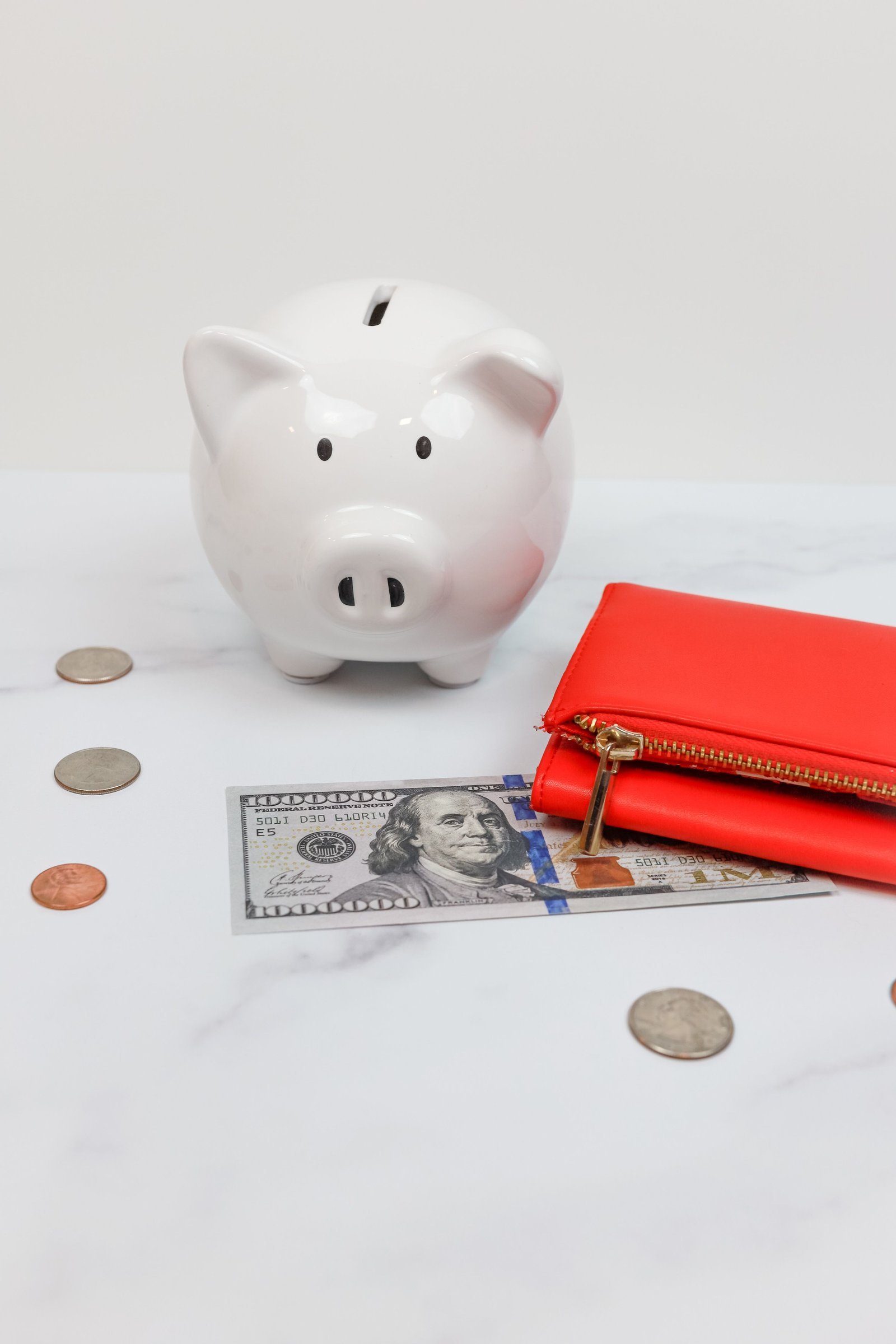
Where you keep an emergency fund matters almost as much as how much you save, because the wrong home can either tempt you to spend it or lock it away when you need it fast. The most common recommendation, and a sensible one for most people, is a separate high-yield savings account at a bank or credit union. It earns more interest than a typical checking account, it is separate from the money you spend day to day, and you can usually move money to your checking account within one to three business days. That slight delay is actually useful: it is fast enough for a real emergency, but slow enough to stop an impulse purchase.
A money market account can work in a similar way. It often pays interest comparable to a savings account and may come with checks or a debit card, but the same rule applies: keep it separate from everyday spending, and check the fees, minimum balance, and withdrawal limits before you open it. Some money market accounts limit the number of withdrawals per month, which is fine for an emergency fund you rarely touch, but not ideal if you want to move money in and out often. The account name matters less than the features: insured deposits, no high fees eating away at a small balance, easy transfers when you truly need the money, and no penalty for withdrawing it in an emergency.
What about investing the fund in stocks, or in a fund that rises and falls with the market? For an emergency fund, that is usually a mistake. Stocks can fall sharply just when you lose a job or face a large bill, which is often when the wider economy is also struggling. If your $10,000 fund drops to $7,000 in a market fall, you have lost exactly the cushion you were counting on. Investments have a place in long-term saving and retirement, where time can smooth out ups and downs, but emergency money needs to be stable. A small amount of interest is a fair trade for knowing the full amount will be there.
Keeping cash at home alone is also a weak plan. A small amount of cash for a power cut or a day when cards do not work is reasonable, but a full emergency fund in a drawer or under a mattress is not insured, can be lost or stolen, earns no interest, and is far too easy to spend a little at a time. A bank or credit union account, by contrast, is typically insured up to $250,000 per depositor, per insured institution, through the FDIC for banks or the NCUA for credit unions, for covered accounts. Check that the institution is insured and that you understand which accounts are covered, but for most savers, a regular savings account at an insured institution is a safe home for emergency money.
How to Build It Step by Step from Zero
Starting from zero can feel like the hardest part, because the gap between nothing and a full fund looks huge. Break it into steps you can actually do this week. First, list your essential monthly expenses. Do not guess from memory alone: look at the last two or three months of bank and card statements and add up housing, utilities, groceries, transport, insurance, and minimum debt payments. That total is the base for your three-to-six-month target. If your essential total is $3,000, write down $9,000 and $18,000 as your range. If it is lower or higher, use your own numbers. This step alone often brings relief, because a vague worry becomes a concrete target.
Second, open a separate savings account if you do not already have one, and give it a clear name, such as Emergency Fund. Naming matters more than it sounds. An account called Savings can mean anything, while an account called Emergency Fund reminds you, every time you see it, what the money is for. Third, set your starter goal. For most people, $1,000 is a good first target, but if money is very tight, set $500 first and raise it later. Fourth, choose a regular amount you can save each payday, even if it is small. Fifth, move that amount on payday, before you spend the rest. We will talk more about automation in a moment, but the order matters: save first, then spend what is left, not the other way round.
Take the illustration of the household with $3,000 in monthly essentials again. Suppose they can save $250 a month after covering essentials and minimum payments. Their starter $1,000 takes four months. Their three-month target of $9,000 takes three years at that rate, which sounds long, but look at the progress along the way. After six months they have $1,500, after a year $3,000, after two years $6,000. At each point they are safer than before. If they later find an extra $100 a month, the timeline shortens. If they get a tax refund or a bonus, they can jump ahead. The plan does not need to be perfect. It needs to be steady, and it needs to restart quickly after a setback, because setbacks are part of the process, not proof that the plan failed.
Sixth, track the balance in a simple way you will actually look at: a note on your phone, a line in a spreadsheet, or a progress bar on the fridge. Watching a number grow, even slowly, keeps motivation alive in a way that an abstract goal does not. Seventh, review the plan when life changes. A rent increase, a new child, a job change, or paying off a car loan all change your essential total, so recalculate the three-to-six-month range once or twice a year. Eighth, protect the fund from yourself by keeping it in that separate account, not in checking where it blends in with grocery money. Separation is not about distrust. It is about making the right choice the easy choice.
Automating Savings on Payday
Automation is the single most reliable trick in this whole guide, because it removes the weekly decision to save. If you have to choose, every payday, between saving and spending, spending will win on the weeks when you are tired, busy, or tempted. An automatic transfer, set up once, moves money to your emergency account on payday without asking you again. Many employers allow you to split a direct deposit between two accounts, so part of your pay goes straight to savings and you never see it in checking. If that is not available, most banks let you set up a recurring transfer for the day after payday, which works almost as well.
Start with an amount that feels slightly uncomfortable but not impossible. For some households that is $25 a pay period, for others $100 or $200. A good test is whether you can keep the transfer going for three months without cancelling it. If you cancel in the first month, the amount was probably too high, or an unexpected bill hit at the wrong time. Lower it and restart, rather than giving up. If you barely notice it after three months, raise it by $25 or $50. Small increases, made a few times a year, add up without ever feeling like a sudden sacrifice. A raise, a debt paid off, or a subscription cancelled is a natural moment to increase the transfer, because the money was already leaving your budget in another form.
Payday automation also helps when income is irregular. Freelancers and gig workers cannot rely on a fixed payday, so a percentage rule often works better: move 10 to 20 percent of each payment into the emergency account as soon as it arrives, before spending the rest. On a $500 payment, that is $50 to $100. On a $2,000 payment, it is $200 to $400. In lean weeks you save less, in good weeks you save more, but the habit stays the same. The key is to make the transfer the first step after money arrives, not the last step after everything else is paid. What is left at the end of the month is rarely saved, because it is rarely there.
Finding Money
Finding money for an emergency fund does not have to mean cutting everything enjoyable from your life. Start with the leaks: subscriptions you no longer use, duplicate services, and fees you pay without noticing. Go through the last three months of statements and mark every recurring charge. Ask, for each one, whether you used it in the last month and whether you would miss it. Cancelling two subscriptions at $15 each frees $30 a month, which is $360 a year, without changing your daily life much. That alone covers a starter fund in under three years, and combined with a payday transfer, it speeds things up considerably.
Side income can help, but be realistic about time and energy. Selling items you no longer need, picking up an occasional shift, doing freelance work in a skill you already have, or taking on a short-term project can all add $100 to $300 in a good month. Treat that money as fund money from the start: move it to the emergency account the day it arrives, before it blends into general spending. If side income is irregular, use it to jump-start the starter goal or to refill the fund after an emergency, rather than relying on it for the regular monthly transfer. A one-time boost is valuable, but a steady habit is what builds a fund to three or six months.
A tax refund is another common boost, and it deserves a plan before it arrives. Many people spend a refund before they receive it, because it feels like extra money. Decide in advance what share will go to the emergency fund. Putting half a $1,200 refund into the fund, for example, adds $600 in one move, while still leaving half for other goals or bills. The same logic applies to a bonus, a cash gift, or money from selling a larger item. You do not have to put every windfall into the fund, but deciding the share in advance stops the whole amount from disappearing into everyday spending. A fund built from a mix of steady transfers and occasional boosts grows faster than a fund built from either alone.
What Counts as a Real Emergency vs Not
Knowing what counts as an emergency is what keeps the fund intact for the times that matter. A real emergency is usually urgent, unexpected, and necessary: a car repair without which you cannot get to work, a medical expense you cannot delay, a broken heating system in winter, a burst pipe, or covering essential bills after a job loss. These are expenses that, if not paid, make life harder, more expensive, or unsafe in the short term. They are not fun, they are not planned, and they cannot reasonably wait until next month.
A sale, a holiday, a new phone because the old one is slow but still works, a wedding gift, or a home upgrade you would like are not emergencies, even if they feel urgent in the moment. That does not mean you should never spend on those things. It means they should come from other pots: a sinking fund, a holiday fund, or regular spending money, not from the emergency fund. Blurring the line is the most common reason funds disappear. Each small withdrawal feels justified on its own, but together they leave nothing for a real crisis. A simple test helps: if you can delay it by a month without serious harm, it is probably not an emergency. If delaying it would cost you your job, your health, or your home, it probably is.
There are grey areas, and it helps to decide your own rules in advance, when you are calm, rather than in the moment. A pet emergency, for example, is a real emergency for many households, and planning for it in advance, or keeping a small separate pet fund, avoids a painful choice later. A laptop that breaks when you work from home may be an emergency, while the same break for a casual user may not be. Write down two or three examples that count for you, and two or three that do not, and keep that note with your budget. When a borderline expense appears, check it against your own list. That pause, even for a day, often makes the right answer clear.
How to Refill After Using It
Using an emergency fund is not failure. It is the fund doing its job. The mistake is not refilling it afterwards, because the next emergency rarely waits until you feel ready. Treat refilling as a new, smaller goal with a clear plan. First, note how much you used and what remains. If you spent $800 from a $3,000 fund, you have $2,200 left and $800 to rebuild. That is a concrete target, not a vague feeling of being behind. Second, restart the payday transfer immediately, even if you have to lower it for a while. A $50 transfer that keeps going beats a $200 transfer you cancel after a month.
Third, look for a one-time boost to speed the refill, without raiding other essential goals. A tax refund share, money from selling something, or a few weeks of side income can close a large part of the gap. Fourth, be honest about whether the emergency changed your target. If you used the fund for a car repair and the car is now older and more likely to need further work, you may want to rebuild faster, or set aside a separate car fund as well. If you used it during a job loss and you are now back at work, your first priority is simply to restore the balance you had, before worrying about increasing it.
Refilling also teaches you something useful: how the fund felt in practice. Did you have enough, or did you still need a credit card for part of the cost? Did the transfer from savings to checking take longer than expected? Did you hesitate to use the fund because you felt guilty? Those answers help you adjust the amount, the account, and your own rules for next time. A fund that is used and refilled is stronger than a fund that is never tested, because you know it works and you trust yourself to rebuild it. Keep the refill period short and specific, for example three months to restore $800, and mark the date you expect to finish. When you reach it, acknowledge the progress. Saving is often invisible work, and noticing it helps you keep going.
Emergency Fund vs Sinking Funds
An emergency fund and a sinking fund sound similar, but they do different jobs, and confusing them is a common source of trouble. An emergency fund is for surprises you cannot predict: a job loss, a sudden repair, an urgent medical bill. A sinking fund is for expenses you can predict, even if you do not know the exact date: car insurance paid every six months, holiday spending, a new phone every few years, annual subscriptions, or a planned home repair. You save a little each month toward a known cost, so when it arrives, you are ready and you do not need to borrow or raid the emergency fund.
Take car maintenance as an example. You know tires wear out, brakes need replacing, and servicing is due each year, even if you do not know which month a bill will arrive. Putting $50 a month into a car sinking fund means that when a $600 service bill comes, you pay it from that fund and your emergency fund stays untouched. The same logic applies to holidays, gifts, and annual bills. Sinking funds turn large, predictable expenses into small, regular savings, which makes a monthly budget far less stressful. They also protect the emergency fund, because predictable costs no longer look like emergencies.
You do not need a sinking fund for everything at once. Start with the one or two predictable costs that most often derail your budget. For many households, that is car costs and annual insurance or subscription renewals. Open a separate savings account or a labelled sub-account for each, if your bank allows it, and set a small automatic transfer. Over time, add funds for holidays, home maintenance, and gifts as your budget allows. The emergency fund remains the top priority, because surprises cannot wait, but sinking funds are the supporting cast that keep everyday life from draining it. Together, they cover both the unexpected and the expected, which is a far more complete safety net than either alone.
Mistakes to Avoid
The first mistake is keeping the fund in checking and spending it without noticing. Checking is for money you plan to spend this month. Emergency money that sits there blends in with grocery and fuel money, and it is spent a little at a time on things that feel small. A separate account, with a clear name, stops that drift. The second mistake is investing the fund in stocks or other volatile assets, hoping for a higher return. As discussed earlier, a fall in the market can shrink the fund just when you need it most. The third mistake is having no fund at all and relying on credit cards as a backup plan. Credit can help in a true crisis, but it is not a fund: it must be repaid with interest, and a card limit can be reduced or a card closed at exactly the wrong time.
Another mistake is setting the goal too high at the start and giving up. Aiming for six months of expenses before you have $1,000 saved feels impossible, and many people stop trying. Start with the starter goal, celebrate reaching it, then move to the next stage. A related mistake is the opposite: reaching $1,000 and stopping, as if the job is done. A starter fund is a great first step, but it will not cover a job loss or a major repair. Keep building after the first milestone, even if the monthly amount drops for a while. Consistency matters more than speed.
Finally, do not forget to update the fund as life changes, and do not use it for non-emergencies and promise to pay it back later. Repayment promises are easy to make and easy to break, especially when the money is already spent. If a non-emergency expense is important, save for it separately or wait. If you do borrow from the fund for a grey-area expense, treat it like a real debt: write down the amount, set a repayment date, and restart the transfer the next payday. That discipline is what turns a one-time slip into a lesson, rather than the start of an empty fund.
Keeping It Separate but Accessible
The balance to strike is simple to state and tricky in practice: the fund should be separate enough that you do not spend it by accident, but accessible enough that you can use it quickly in a real emergency. A separate high-yield savings account at a different bank from your checking account is a popular solution, because transfers take a day or two, which discourages impulse use, but the money is still available within a few days. A separate account at the same bank is also fine, especially if transfers are instant and you trust yourself not to dip in. What matters is the separation in your mind and in your budget, not the exact bank.
Access in a true emergency usually means one to three business days, which covers most repairs, bills, and income gaps. If you need cash the same day, a debit card linked to a checking account can bridge the gap, and you can reimburse checking from savings when the transfer arrives. Keep a small amount of everyday flexibility in checking for that reason, but do not let that flexibility become an excuse to keep the whole fund there. For most emergencies, a few days is fast enough, and the slight delay is a feature, not a flaw. It gives you time to check whether the expense is truly an emergency, get a second quote, or confirm that insurance will cover part of it.
Review access once a year. Check that you know how to transfer money, that your login details work, that the account has no unexpected fees, and that the institution is still insured. Tell a trusted person, such as a partner, where the fund is and how to access it if you are ill or unable to manage money for a while. That step is often overlooked, but it matters: a fund no one else can find is of limited help in a serious emergency. Separation plus access, plus a simple plan for who can reach it, is the combination that makes an emergency fund genuinely useful.
Frequently Asked Questions
How much should I save first? Start with a starter goal of $1,000 if you can, or $500 if money is very tight, then build toward three to six months of essential expenses. The right number depends on your expenses, income stability, and household situation, so use the ranges in this guide as a starting point, not a rule that fits everyone.
Is three months enough, or do I need six? Three months may be enough if you have two stable incomes, low fixed costs, and can find work quickly. Six months, or more, is safer if you are the only earner, self-employed, in a slow-hiring field, or have dependents and a mortgage. When in doubt, aim higher, but do not delay starting while you decide.
Where is the best place to keep an emergency fund? For most people, a separate high-yield savings account at an insured bank or credit union is a good choice. It is safe, earns some interest, and is accessible within a few days. A money market account can also work. Avoid stocks for emergency money, and avoid keeping the full fund as cash at home.
Can I use my emergency fund for a holiday or a sale? Those are not emergencies, even if they feel urgent. Save for them separately, through a sinking fund or regular spending money, so the emergency fund stays intact for true surprises. If you do use it for a non-emergency, repay it on a set schedule, starting the next payday.
What if I have debt? Should I save or pay debt first? Do both, in balance. Build a small starter fund, often $1,000, first, so a surprise does not force new debt. Then focus on high-interest debt, while keeping a small regular transfer to the fund. Once expensive debt is under control, increase the fund toward three to six months. The exact balance depends on interest rates and your situation, but a small fund plus a debt plan beats either alone.
How fast should I refill the fund after using it? As fast as you reasonably can, starting the next payday, even with a smaller transfer. Set a specific target and date, look for a one-time boost if possible, and treat refilling as a priority until the balance is restored. The next emergency does not wait for a convenient time.
Conclusion
Building an emergency fund is not about becoming rich, and it is not about never spending money on anything enjoyable. It is about giving yourself room to handle life without turning a bad week into months of debt. Start with a starter goal you can reach, keep the money in a separate, insured savings account, automate a transfer on payday, and build toward three to six months of essential expenses at a pace you can sustain. Use sinking funds for predictable costs, keep the line between emergencies and wants clear, and refill the fund promptly after you use it.
Take the illustration household again: $3,000 in monthly essentials, $250 saved each month, a starter $1,000 in four months, and steady progress toward $9,000 and then $18,000. Their numbers will not be yours, and their timeline will not be yours, but the pattern is the same. Small, regular steps, protected from everyday spending, add up to real security. Start this week, even with $25, and let the habit do the heavy lifting. Your future self, facing an unexpected bill or a sudden loss of income, will be grateful for the cushion you built when things were calm.
Disclaimer: This article is general information only, not personal financial advice. Savings amounts, account features, and insurance coverage vary by institution and over time, so check current terms and consider speaking with a qualified financial professional about your own situation.