
A medical bill can feel like a final verdict: a large number, a due date, and no room to argue. In the United States, though, that number is very often a starting point, not a settled price. Hospitals, clinics, and labs routinely bill amounts far above what insurers actually pay, and many offer discounts, payment plans, or financial assistance to patients who ask. Learning how to negotiate medical bills can turn a frightening envelope into a manageable conversation, and in many cases it can reduce what you owe by a meaningful amount.
As an illustration, not a real person, consider Maria, a 38-year-old teacher who went to an emergency room for a sprained ankle and later received a bill for several thousand dollars. She assumed she had to pay it in full and on time, and she nearly put it on a credit card. Instead, she asked for an itemized bill, found a charge for a service she had not received, and then called the billing department to ask about a discount and a payment plan. The corrected bill was lower, and the remainder was spread over monthly payments she could actually afford. Maria’s story is not unusual, and the steps she took are available to almost anyone.
Why Medical Bills Are Often Negotiable
Medical prices in the US are unusual because the same service can carry several different prices depending on who is paying. A hospital may bill one amount to an insurer, accept a much lower negotiated rate from that insurer, and bill an uninsured patient a different amount again. That gap is the reason negotiation works: providers know that collecting a reduced amount is better than collecting nothing, and billing departments have procedures for discounts, hardship adjustments, and payment plans that are simply not advertised on the bill itself.
Providers also expect a certain share of bills to go unpaid or to be disputed, so they build room into their processes for compromise. A polite, informed request is routine for them, not confrontational. You do not need to be aggressive or to know legal jargon. You need to understand what you were charged for, what your insurance was supposed to cover, and what you can realistically pay, and then ask clearly for help on that basis.
Reading an Itemized Bill
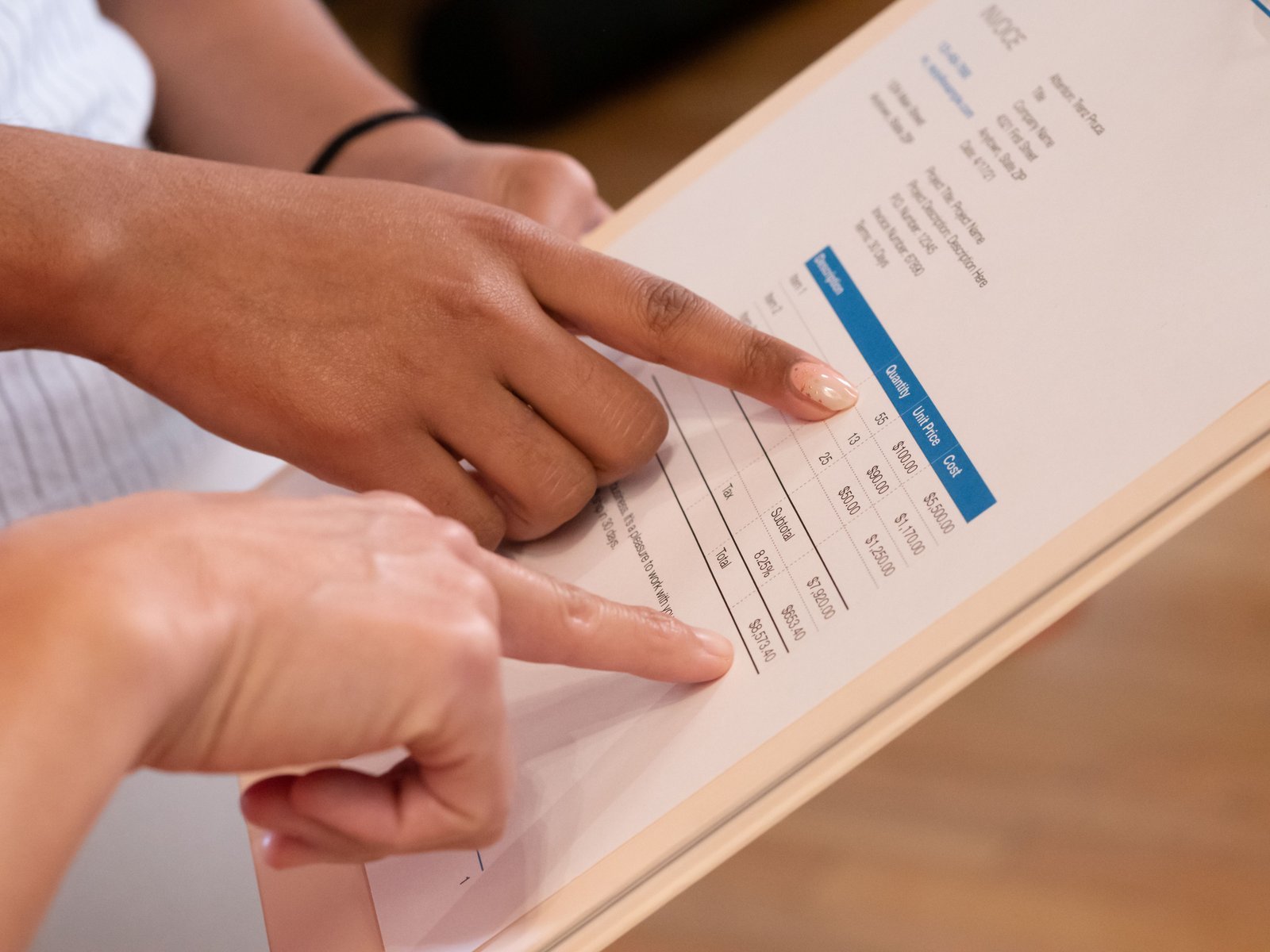
The first step is to stop paying from a summary bill. A summary usually shows only a total and a vague description such as emergency services, which tells you almost nothing. Ask the provider for an itemized bill, also called a detailed statement, which lists each service, supply, and procedure separately, often with codes and dates. You can usually request it through the billing department by phone or through the patient portal, and providers are generally required to provide it on request.
Read the itemized bill line by line. Check the dates against your visit, the descriptions against what actually happened, and the quantities against what you remember. Look for charges for a private room when you were in a shared one, for medication you did not receive, or for a procedure that was ordered but cancelled. Note anything you do not recognize, and write down your questions before you call, since billing conversations go better when you are specific rather than simply saying the bill seems too high.
Checking for Errors and Duplicate Charges
Billing errors are common enough that checking for them is worth your time on every large bill. Duplicate charges are among the most frequent: the same lab test, imaging study, or medication appearing twice, sometimes on different days or under slightly different descriptions. Also watch for upcoding, where a service is billed at a higher complexity level than what was actually done, and for charges for services that were ordered but never performed, such as a test that was cancelled or a consultation that never happened.
Compare the itemized bill against your own records: your discharge papers, your visit summary, and any test results you received. If something does not match, call the billing department and ask for an explanation of that specific line, using its code and date. Phrasing matters: ask what the charge covers and why it appears, rather than accusing anyone of an error. In many cases, the representative can correct a coding mistake on the spot or send it for review, and the corrected bill arrives lower. Keep notes of every call, including the date, the representative’s name, and what was promised.
Checking Insurance Processing and Your EOB
Before you negotiate with a provider, make sure your insurance processed the claim correctly. Your insurer sends an Explanation of Benefits, or EOB, which is not a bill but a statement of what was charged, what the insurer allowed, what it paid, and what it says you owe. Compare the EOB against the provider’s bill. They should agree on the patient responsibility amount. If they do not, the provider may have billed you before insurance finished processing, or the claim may have been coded incorrectly.
Common insurance problems include a claim denied as out of network when the facility was in network, a service coded in a way your plan does not cover, or a deductible or copay applied incorrectly. If you spot a mismatch, call your insurer first and ask them to reprocess or explain the claim. Get a reference number for the call. Once insurance has corrected its side, ask the provider for an updated bill, since negotiating from a bill that insurance has not finished with means negotiating the wrong number.
Asking for an Itemized Bill and the Cash Price
Two questions belong in every billing conversation, and they are easy to ask. First, ask for the itemized bill if you do not already have it, since you cannot negotiate charges you cannot see. Second, ask for the cash price, sometimes called the self-pay price, which is the amount the provider charges patients paying directly without insurance. The cash price is often substantially lower than the billed amount, sometimes by a large fraction, because providers prefer prompt payment without the cost and delay of insurance processing.
Even if you have insurance, asking about the cash price is useful information. In some cases, particularly for smaller bills, the cash price may be lower than what you would owe after your deductible, and paying it directly may be the cheaper route. Be careful, though: amounts you pay outside insurance usually do not count toward your deductible or out-of-pocket maximum, so weigh that trade-off before choosing. If you do pay a cash price, get the agreement in writing before you pay, including confirmation that the payment settles the account in full.
Negotiating a Discount or Payment Plan
When you call the billing department, lead with courtesy and clarity. State your name, the account number, and the amount, then explain your situation briefly: you want to pay what you owe, but the full amount is beyond your budget right now. Then ask directly: is a discount available if I pay in full, or can we set up a payment plan? Many providers offer a prompt-pay discount, often in the range of ten to thirty percent, for patients who pay the balance quickly, and many offer interest-free payment plans spread over months, sometimes over a year or more for larger balances.
If the first offer does not work for you, say so calmly and propose a number you can manage. Billing representatives often have authority to approve one level of discount and can escalate to a supervisor for more. Ask whether any hardship program applies, and ask what documentation they need, such as proof of income. Whatever you agree, get it in writing before you send money: the discounted total, the monthly amount, the number of payments, and confirmation that the plan keeps the account out of collections. A verbal promise is not enough if the account later changes hands.

Financial Assistance and Charity Care
Many hospitals, especially nonprofit hospitals, run financial assistance programs, often called charity care, that reduce or erase bills for patients below certain income levels. These programs are required in many cases for hospitals to keep their nonprofit status, yet they are rarely mentioned unless you ask. Eligibility is usually based on household income relative to the federal poverty level, and thresholds vary by hospital and by state, with some programs covering patients earning several times the poverty level and others limited to lower incomes.
Ask the billing department or the hospital’s financial counseling office whether a financial assistance application exists, and request the form even if you are unsure you qualify. The application typically asks for income documentation and household size, and approval can take a few weeks, during which you should ask for the account to be placed on hold so it is not sent to collections. If you are approved for partial assistance, the remaining balance can often still be negotiated or placed on a payment plan. Do not assume you earn too much to qualify; many middle-income families are surprised by the thresholds.
Medical Billing Advocates
If a bill is large, complex, or stuck, a medical billing advocate can help. Advocates review itemized bills for errors, negotiate with providers and insurers, and appeal denials on your behalf. Some work for nonprofit organizations or patient assistance programs at low or no cost, while private advocates typically charge either an hourly rate or a percentage of the savings they achieve, often in the range of twenty to thirty percent of the amount saved. That fee structure means they have an incentive to reduce your bill, but it also means you should compare the expected savings against the fee before hiring one.
An advocate is most valuable when the bill involves multiple providers, a denied claim, or a dispute that has dragged on for months. For a single straightforward bill, the steps in this guide are usually enough on your own. If you do hire an advocate, check their background, ask how they charge, and get the fee agreement in writing. Be cautious of anyone who guarantees a specific reduction or asks for a large upfront payment before doing any work.
Disputing Surprise Bills in General Terms
Surprise bills arise when you receive care at an in-network facility but are treated by an out-of-network provider, or when you receive emergency care outside your network, and the resulting bill is far higher than you expected. Federal protections, generally known as the No Surprises Act, limit what you can be charged in many of these situations, generally to the in-network cost-sharing amount for qualifying emergency services and for certain non-emergency services at in-network facilities. The details depend on the type of service, the setting, and your plan, and state laws may add further protections.
If you believe a bill qualifies as a surprise bill, do not pay it immediately. Contact your insurer and ask whether the protections apply, and contact the provider to dispute the charge, referencing the protections in general terms. Keep copies of everything, and if the dispute is not resolved, you can generally use the federal independent dispute process or your state’s consumer assistance program for guidance. The key point is that surprise bills are not always yours to pay in full, and a dispute is worth pursuing before the account moves to collections.
Protecting Your Credit While Disputing
A disputed medical bill can feel like a threat to your credit, and in the past it often was. Rules have improved in recent years: medical debt generally does not appear on credit reports until it is at least a year old, and paid medical collections are generally removed from credit reports, while smaller medical collections are often excluded altogether. These protections vary and continue to evolve, so check the current rules, but the direction is clear: a bill under dispute, especially one you are actively working to resolve, should not silently wreck your credit overnight.
Protect yourself with a few practical steps. First, tell the provider in writing that the bill is disputed and ask them not to send it to collections while the dispute is pending; keep a copy of that letter. Second, monitor your credit reports during the dispute so you can catch any collection entry early and dispute it with the bureau as well. Third, do not ignore the bill entirely: staying in communication, even to say you are disputing a charge, is far better than silence, which is what usually leads to collections. If a collection agency does contact you, ask for written validation of the debt before you pay anything, and never agree to a payment you cannot sustain.
Scripts for Calling Billing Departments
Many people avoid calling because they do not know what to say. These short scripts cover the most common situations. Adapt the wording to your own voice; the structure is what matters.
Asking for an itemized bill: Hello, I would like to request an itemized bill for my account, including all procedure codes and dates, so I can review the charges. Could you send it through the patient portal or by mail? Asking about a discount: I would like to pay this bill, but the full amount is difficult for me right now. Is a discount available if I pay in full, or could we set up an interest-free payment plan? Asking about financial assistance: Does your hospital offer a financial assistance or charity care program, and could you send me the application? I would like to apply before making further payments.
Disputing a specific charge: I am looking at line item number [code] dated [date] for [description], and I do not believe this charge is correct because [reason, such as the service was not received or it appears twice]. Could you review this line and send me a corrected bill? If the representative cannot help, ask politely to speak with a supervisor or a financial counselor, and ask for a reference number for the call. End every call by confirming what was agreed and asking for it in writing.
Frequently Asked Questions
Can I really negotiate a medical bill, or is the price fixed? In most cases you can negotiate. Providers routinely offer discounts, payment plans, and financial assistance, and billed amounts are often well above what insurers actually pay, so a polite request is a normal part of billing, not an exception.
Should I pay the bill first and negotiate later? Generally no. Once you have paid in full, you have far less leverage, and refunds can be slow. Review the itemized bill and your insurance processing first, and negotiate before paying, unless the account is about to go to collections and you need to protect your credit, in which case a partial payment or a written payment plan is better than silence.
What if I cannot afford the bill at all? Ask about financial assistance or charity care, and ask whether the balance can be reduced or written off in whole or part. Nonprofit hospitals in particular have programs for this, and many other providers have hardship policies. Apply even if you are unsure you qualify.
Will negotiating hurt my credit? Negotiating itself does not hurt your credit. What hurts is ignoring a bill until it goes to collections. Staying in communication, disputing charges in writing, and agreeing to a payment plan you can sustain all protect your credit better than silence.
Do I need a billing advocate? Not always. For a single straightforward bill, the steps in this guide are usually enough. An advocate is most useful for large, complex, or long-running disputes involving multiple providers or denied claims.
What is the difference between a bill and an Explanation of Benefits? A bill comes from the provider and asks you to pay. An Explanation of Benefits comes from your insurer and explains what was charged, what was allowed, what was paid, and what you owe. It is not a bill, but comparing it with the provider’s bill is one of the best ways to catch errors.
Conclusion
A medical bill is not a verdict, and it is not a moral judgment. It is a starting number in a system where prices vary widely and discounts are common. Read the itemized bill, check it against your insurance, ask for the cash price, and then call and ask clearly for what you need: a correction, a discount, a payment plan, or financial assistance. Keep notes, get agreements in writing, and protect your credit by staying in communication rather than going silent.
The call may feel uncomfortable the first time, but billing departments handle these conversations every day, and the worst outcome is usually that the answer is no and you try a different approach. The best outcome can be a bill reduced by hundreds or thousands of dollars, or a payment plan that turns a crisis into a manageable monthly amount. That is a phone call worth making.
Disclaimer: This article is general educational information only, not personal financial, medical, or legal advice for your situation. Billing rules, insurance processing, surprise-billing protections, and financial assistance programs vary by provider, plan, and state and change over time, so check current guidance and consider speaking with a qualified professional or patient advocate for complex cases.